
Why Consistency Is One of the Hardest Parts of Coffee Liqueur Production
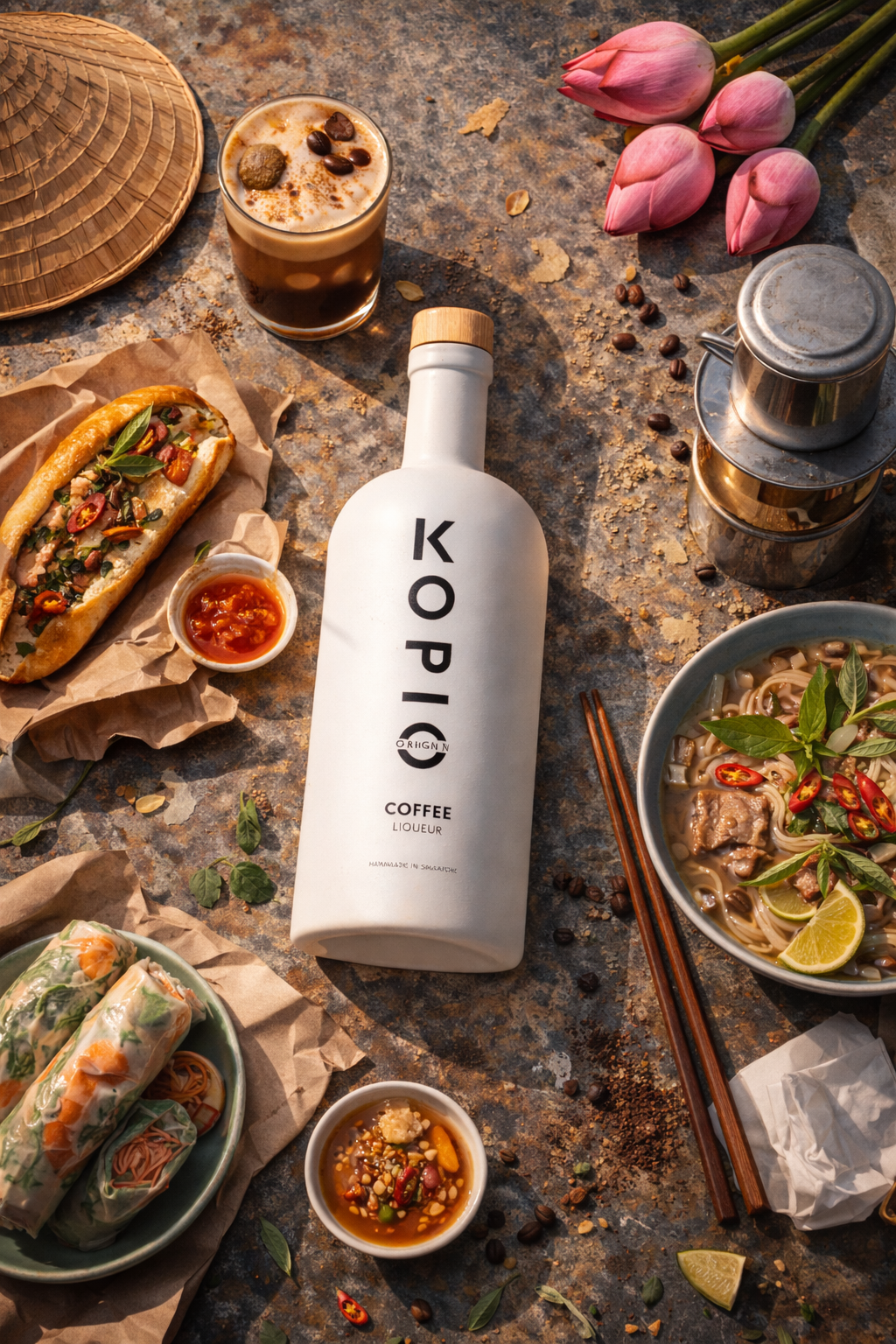
Consistency is easy to claim and difficult to achieve. In coffee liqueur production, it is one of the most demanding challenges producers face, and one of the clearest indicators of whether a product is truly well made. A coffee liqueur can taste excellent once by accident. Tasting the same, behaving the same, and performing the same across every batch is something else entirely.
Unlike many spirits, coffee liqueur sits at the intersection of agriculture, extraction, and blending. Coffee changes. Alcohol amplifies differences. Sugar locks decisions in place. Small variations that might be tolerable in other categories become obvious very quickly when coffee is involved.
This is why consistency is not a cosmetic concern. It is structural. And it is why producers who prioritise process over branding tend to earn more trust over time.
KopiO was developed with this challenge front and centre. Created by Studio Origin, it is designed to deliver the same balance, texture, and coffee character from batch to batch, not just at launch. That discipline is part of the broader process philosophy at Studio Origin.
Coffee Is a Moving Target
Coffee is not a fixed input. Even when sourced from the same origin and roaster, natural variation occurs due to harvest conditions, storage, and roast behaviour. Slight differences in moisture content, roast development, or grind response can alter extraction outcomes.
In brewed coffee, these differences can be adjusted cup by cup. In coffee liqueur, they cannot. Once coffee is extracted into alcohol and blended with sugar, the result is largely irreversible. This makes consistency exponentially harder.
Producers who underestimate coffee’s variability often rely on sweetness or intensity to smooth over differences. This may hide inconsistency temporarily, but it usually creates a heavier, less flexible product in the long run.
KopiO’s approach treats coffee variability as something to manage deliberately rather than mask. That mindset underpins how the KopiO range is developed and maintained through Origin Crafted.
Extraction Magnifies Small Errors
Alcohol is an aggressive solvent. Small changes in extraction time, temperature, or coffee ratio can produce noticeable differences in bitterness, aroma, and body. What might be a minor adjustment in a café becomes a major flavour shift in a liqueur.
Consistency requires tightly controlled extraction windows and repeatable processes. Without them, one batch may feel clean and balanced while the next feels sharp or heavy.
This becomes particularly apparent in cocktails that rely on precision. In an Espresso Martini, for example, even slight variations in bitterness or sweetness change how the drink interacts with fresh espresso. The importance of predictable coffee liqueur behaviour in this context is explored in the discussion of why the right coffee liqueur matters for the Espresso Martini.
Sweetness Locks Decisions in Place
Sweetness is not just a flavour component in coffee liqueur; it is a structural one. Once sugar is added, it fixes the balance of the liquid. Any inconsistencies that exist at that point are preserved and amplified.
A slightly over-extracted batch may require more sweetness to soften bitterness. A slightly under-extracted batch may feel thin once sweetness is added. These compensations create divergence over time, pulling the product further from a stable centre.
Maintaining consistency means resisting the urge to “fix” batches after the fact and instead ensuring upstream processes are tightly controlled. KopiO’s sweetness level is calibrated conservatively and consistently, allowing coffee flavour to remain clear without relying on sugar to correct variation.
This discipline shows clearly in cream-based drinks, where inconsistency becomes immediately obvious. KopiO’s reliability in classics like the White Russian highlights the benefits of structural consistency rather than reactive adjustment, as seen in the KopiO-focused White Russian.
Texture Is Often Where Inconsistency Shows First
Mouthfeel is one of the first things to drift when consistency slips. Changes in extraction solids, filtration, or resting time can make one batch feel clean and another feel sticky or thin.
Texture issues are especially damaging because they affect drinkability even when flavour seems similar. A coffee liqueur that tastes right but feels wrong still fails the test.
Maintaining consistent mouthfeel requires attention to filtration, settling, and integration time. These steps rarely appear in marketing, but they are critical in ensuring the liquid behaves the same way every time it is poured.
This consistency becomes even more important when coffee liqueur is used beyond cocktails, such as in desserts. In applications like chocolate mousse, textural variation can quickly overpower a dish. KopiO’s stable behaviour in this context reflects careful control of these quieter production stages, as explored in the look at KopiO chocolate mousse.
Why Professionals Notice Inconsistency Immediately
For bars and hotels, inconsistency creates friction. Recipes need adjustment. Drinks taste different across shifts. Staff lose confidence in the product. These issues are costly in time, waste, and reputation.
This is why hospitality professionals place such a high value on consistency. A coffee liqueur that behaves predictably allows menus and training to remain stable. It reduces decision-making behind the bar and improves service flow.
KopiO’s focus on repeatability is a key reason it is positioned for professional use, where reliability is non-negotiable. Its alignment with hospitality expectations is reflected in Origin Crafted’s trade and retail focus.
Consistency Is a System, Not a Claim
True consistency is not achieved by tasting and adjusting at the end. It is built through systems: controlled sourcing, disciplined extraction, measured sweetness, careful filtration, and adequate resting time. Each element supports the others.
When any part of that system is treated casually, variation creeps in. When the system is respected, consistency becomes the natural outcome rather than a constant struggle.
KopiO’s character is the result of this systems-based approach. Its balance is not recalibrated batch by batch; it is protected through process.
Why Consistency Builds Long-Term Trust
Consistency is rarely exciting, but it is deeply reassuring. It allows drinkers to form expectations and professionals to build confidence. Over time, it becomes one of the strongest signals of quality.
A coffee liqueur that tastes good once may be interesting. A coffee liqueur that tastes the same every time becomes dependable.
KopiO demonstrates how difficult consistency really is—and why it matters. In a category shaped by natural variation and sensitive processes, delivering the same clear, balanced experience again and again is one of the hardest achievements of all.
