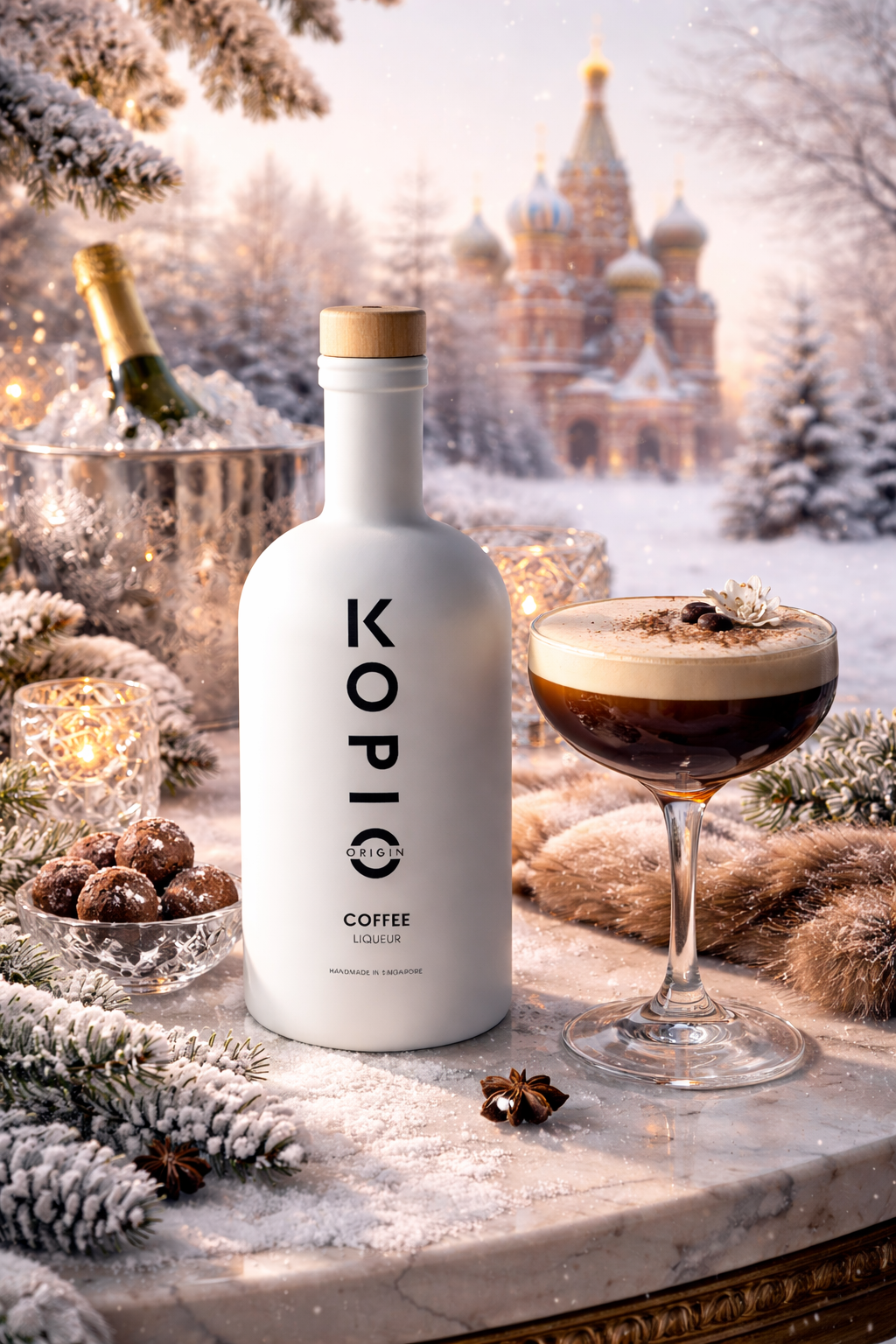
Coffee liqueur looks deceptively simple. Coffee, sugar, alcohol — three familiar elements that feel easy to combine. Yet balance in coffee liqueur is one of the hardest things to get right in spirits production. Many bottles taste fine at first sip but quickly reveal problems once mixed, chilled, or paired with food.
The difficulty lies in the fact that coffee liqueur has to work in more situations than most people realise, and every ingredient is pulling in a different direction.
Coffee Is Unforgiving Once Alcohol Enters the Picture
Coffee behaves very differently once alcohol is introduced.
Bitterness becomes sharper. Acidity becomes more noticeable. Aromas lift faster and fade faster. A coffee extraction that tastes fine on its own can suddenly feel thin or harsh once alcohol acts as a solvent and amplifier.
This is why coffee-forward liqueurs like KopiO by Studio Origin are built with enough coffee concentration to survive dilution, chilling, and mixing. If the coffee backbone isn’t strong and stable from the start, no amount of sugar later can truly fix it.
Sugar Is Both a Solution and a Trap
Sugar is often used to smooth rough edges, but that convenience comes at a cost.
A small increase in sugar can make a coffee liqueur feel rounder and more approachable. Push it a little further, and nuance disappears. Push it too far, and the liqueur becomes syrupy, tiring, and structurally useless in cocktails.
The real challenge is that sugar affects multiple things at once:
Perceived sweetness
Mouthfeel and viscosity
How long flavours linger
Balancing sugar isn’t about taste alone. It’s about how the liqueur behaves from first sip to finish — especially once ice and dilution enter the equation.
This balancing act is critical in drinks like the Espresso Martini, where sugar must support bitterness without flattening the drink. Studio Origin breaks this down clearly in The Espresso Martini Done Properly.
Alcohol Has to Disappear Without Vanishing
Alcohol plays a strange role in coffee liqueur.
Too prominent, and it creates heat that clashes with coffee bitterness. Too subdued, and the liqueur feels thin and unstable. The goal is for alcohol to be present structurally but invisible sensorially.
This is harder than it sounds. Alcohol carries aroma and preserves flavour, but it also sharpens edges. Getting it to lift coffee without announcing itself requires careful blending and restraint.
That’s one reason balanced coffee liqueurs are difficult to scale for professional environments, and why producers who focus on usability prioritise integration over intensity — a philosophy reflected in Studio Origin’s trade and retail approach.
Texture Has to Walk a Narrow Line
Texture is where balance often breaks.
A coffee liqueur needs enough body to feel satisfying, but not so much that it becomes heavy. Sugar, coffee solids, and alcohol all contribute to viscosity, and small changes can shift the experience dramatically.
A heavy liqueur can feel indulgent when sipped neat, but cloying in cocktails. A light one may mix well but feel hollow on its own. Finding the middle ground is difficult because the liqueur has to succeed in both contexts.
This becomes especially clear in creamy cocktails. In a White Russian-style drink, a poorly balanced liqueur either disappears under dairy or turns the drink into syrup. The KopiO White Russian shows how controlled texture allows coffee to stay present without overwhelming the palate.
Balance Has to Survive Real Use, Not Just Tasting Notes
One of the biggest reasons balance is hard is that coffee liqueur isn’t meant to be tasted only neat.
It has to survive:
Ice and dilution
Espresso bitterness
Dairy richness
Time in the glass
A liqueur that tastes balanced in isolation may fall apart under any of these conditions. This is why professional buyers test coffee liqueurs in real drinks, not just tasting flights.
You can see how this philosophy plays out across Studio Origin Stories, where coffee liqueur is consistently shown in cocktails and desserts rather than abstract tasting descriptions.
Desserts Make Imbalance Obvious Instantly
Desserts are brutal honesty tests.
Excess sugar becomes obvious immediately. Alcohol heat clashes with sweetness. Weak coffee tastes muddy. Only well-balanced liqueurs integrate cleanly.
In the KopiO chocolate mousse, balance allows coffee to deepen chocolate and lift aroma without the dessert tasting alcoholic or heavy. That kind of result only happens when balance is built deliberately from the start.
Why “Close Enough” Isn’t Good Enough
Because coffee liqueur feels simple, many producers aim for “close enough.” It tastes sweet. It tastes like coffee. It sells.
But balance isn’t binary. Small deviations compound once the liqueur is used as an ingredient. What seems acceptable neat becomes frustrating behind the bar.
This is why truly balanced coffee liqueurs feel rare. They require discipline, restraint, and an understanding of how the product will actually be used.
The Real Reason Balance Is So Difficult
Coffee liqueur has to be many things at once. It has to be:
Coffee-forward but not bitter
Sweet but not heavy
Alcoholic but not hot
Versatile but not bland
Each of those goals pulls against the others. Achieving balance means saying no to easy fixes and resisting extremes.
When balance is achieved, the result feels effortless. When it isn’t, the flaws show up immediately.
That’s why balance in coffee liqueur is harder than it seems — and why the bottles that truly get it right quietly become the ones people trust.