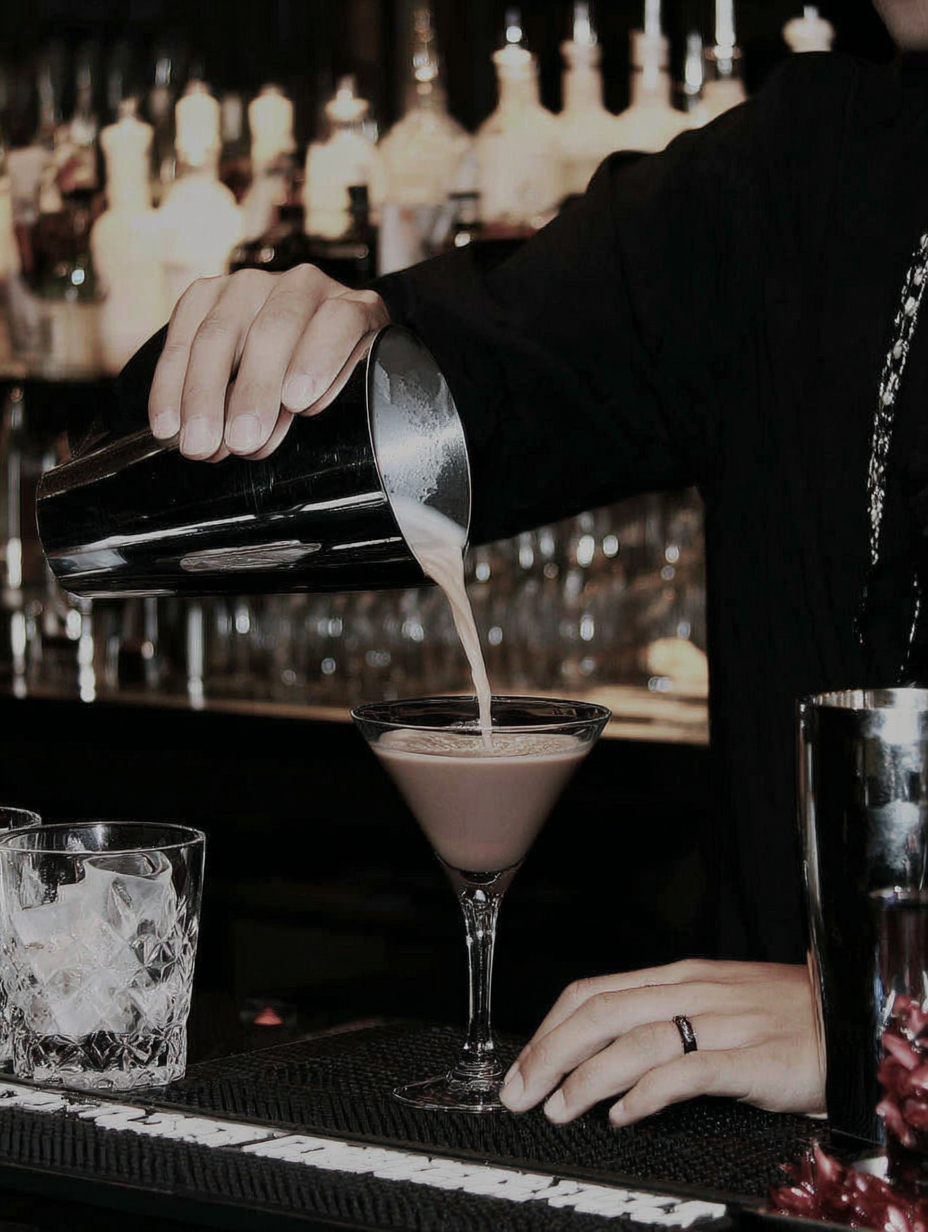
Coffee-based spirits sit in a rare middle ground. They are shaped as much by coffee discipline as they are by spirits discipline, and they fail quickly when either side is ignored. Coffee brings volatility, nuance, and sensitivity. Alcohol brings structure, permanence, and amplification. Craft in this category is not about creativity alone—it is about learning when to apply the rules of coffee, when to apply the rules of spirits, and when neither can be bent.
This dual discipline is what separates coffee-based spirits from flavoured alcohols. Coffee is not an extract you can simply drop into a base spirit. It behaves differently in alcohol, extracts differently, and reveals flaws more clearly. Applying craft here means borrowing the rigor of both worlds and accepting the constraints that come with them.
KopiO was developed with this exact tension in mind. Created by Studio Origin, it treats coffee and alcohol as equal partners rather than one dominating the other. That philosophy defines the work done at Studio Origin.
From Coffee: Precision and Restraint
Coffee culture has evolved around precision. Extraction time, grind size, roast development, and yield are all carefully controlled because small changes produce noticeable results. This mindset translates directly into coffee-based spirits.
In coffee liqueur production, extraction discipline is non-negotiable. Alcohol extracts faster and more aggressively than water, meaning the margin for error is smaller. Craft producers borrow coffee’s sensitivity to timing and restraint, knowing that intensity is easy to achieve and clarity is not.
KopiO’s coffee character reflects this borrowed discipline. Rather than pushing extraction to maximise impact, its process prioritises clarity and balance so that coffee flavour remains defined without becoming harsh. This approach carries across the wider KopiO range available through Origin Crafted.
From Spirits: Structure and Repeatability
Where coffee teaches sensitivity, spirits teach control. Distillation and blending demand consistency, repeatability, and patience. Once alcohol is bottled, variation becomes a liability rather than an expression.
Craft spirits producers understand that flavour must be designed to survive time, transport, and repeated use. In coffee-based spirits, this discipline is especially important because coffee naturally varies from batch to batch.
Borrowing from spirits tradition means building systems that manage variability rather than reacting to it. Sweetness, alcohol strength, and resting time are locked in deliberately, not adjusted impulsively. This systems-based approach allows coffee liqueur to behave predictably across contexts.
This predictability matters most in professional settings, where drinks must perform the same way every night. KopiO’s alignment with these expectations is one reason it is positioned for hospitality and professional use, as reflected in Origin Crafted’s trade and retail focus.
Where the Two Disciplines Intersect
The most difficult part of coffee-based spirits production is not learning coffee or learning alcohol—it is knowing where their rules overlap and where they conflict.
Coffee encourages freshness and immediacy. Spirits reward stability and patience. Coffee celebrates variation. Spirits punish it. Craft emerges when producers respect both without forcing one to behave like the other.
In practice, this means extracting coffee with restraint, then allowing spirits processes—filtration, blending, resting—to do their work. It also means resisting the urge to “fix” coffee variation with sugar or alcohol strength, a shortcut that often undermines balance.
This intersection is most visible in cocktails that demand precision. In an Espresso Martini, for example, coffee liqueur must behave like a spirit while still expressing coffee character. When either discipline is ignored, the drink collapses. The importance of this balance is explored in the discussion of why the right coffee liqueur matters for the Espresso Martini.
Discipline Shows Up in Sweetness Decisions
Coffee teaches that sweetness should highlight flavour, not replace it. Spirits teach that sweetness fixes structure permanently. When these lessons are combined, sweetness becomes one of the most carefully managed elements in coffee-based spirits.
Excess sugar may smooth bitterness, but it also increases viscosity and limits versatility. Craft producers borrow coffee’s aversion to masking flaws and spirits’ respect for irreversible decisions.
KopiO’s sweetness is calibrated to support coffee without dominating it, allowing the liqueur to move comfortably between formats. This balance becomes especially clear in cream-based drinks like the White Russian, where excess sugar quickly becomes oppressive. Its performance in this context is shown in the KopiO-focused White Russian.
Texture Is the Quiet Outcome of Discipline
Both coffee and spirits professionals pay close attention to mouthfeel. In coffee, texture signals extraction quality. In spirits, it reflects balance and integration. Coffee-based spirits inherit both expectations.
When discipline slips, texture is often the first thing to fail. Over-extraction creates heaviness. Over-sweetening creates stickiness. Insufficient resting creates sharpness. None of these issues are solved by branding.
KopiO’s composed mouthfeel reflects the influence of both worlds. It feels present without clinging, structured without fatigue. This balance allows it to function beyond cocktails, particularly in desserts where texture matters as much as flavour. Its behaviour in applications like chocolate mousse highlights how disciplined design carries through, as seen in the exploration of KopiO chocolate mousse.
Why Discipline Matters More Than Creativity
Creativity is often celebrated in craft spirits, but in coffee-based spirits, discipline is the prerequisite. Without it, creativity becomes noise. With it, subtle decisions create lasting impact.
Borrowing from coffee teaches producers when to stop. Borrowing from spirits teaches them how to repeat that decision reliably. Together, these disciplines create products that are expressive without being chaotic.
KopiO’s character reflects this balance. It does not rely on novelty or excess to justify itself. Its credibility comes from how it behaves when used repeatedly, mixed, and revisited.
Understanding Craft Through Practice
Craft in coffee-based spirits is not declared—it is demonstrated. It shows up in consistency, restraint, and versatility. It is felt when a liqueur integrates cleanly instead of dominating, and when it remains drinkable beyond the first sip.
By borrowing discipline from both coffee and alcohol, producers create spirits that respect both traditions rather than exploiting either. KopiO stands as an example of what happens when that balance is taken seriously—where coffee remains expressive, alcohol remains structured, and craft is measured by performance rather than claims.